A Crucial Perspective
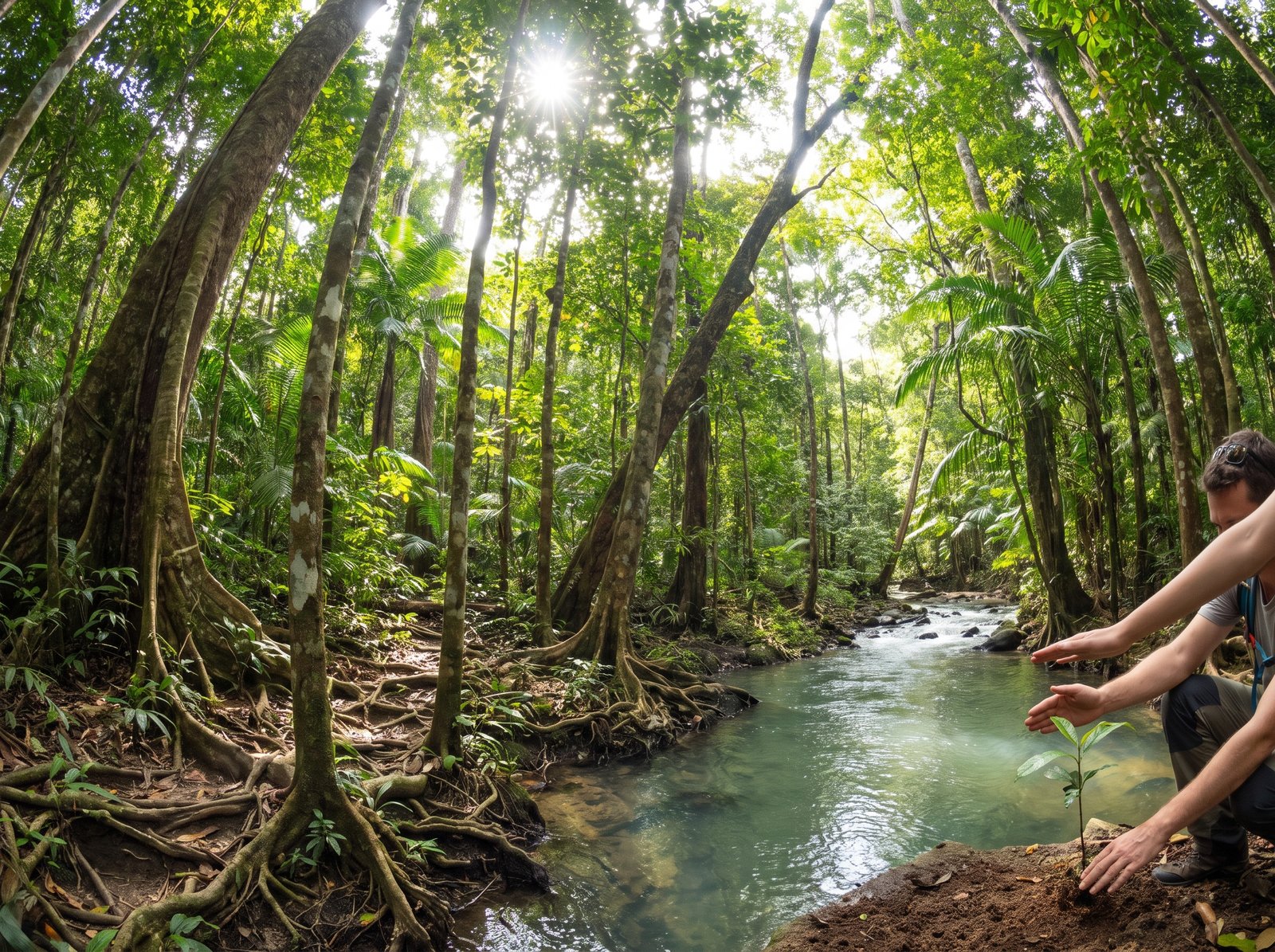
To protect against climate change and diseases, tree planting is an invaluable divine favor. This is why Islam explicitly prohibits the cutting of trees and considers planting them as an adornment of the earth. There is no doubt that tree planting is not just a form of public service; it benefits not only one person or thousands of individuals, but all of humanity.
Trees provide shade and comfort in every situation. They offer protection from pollution and serve as a natural remedy for environmental decay. The fragrance emanating from trees brings healing to patients suffering from various ailments. Rain that falls on trees is particularly beneficial, helping to cool down atmospheric temperatures.
The greatest benefit of trees is that they absorb carbon dioxide and release the oxygen we breathe. This makes tree planting vital, and it is the responsibility of every individual to understand its importance. Trees serve as a primary source of human sustenance, a fact that every person should recognize.
Protection Against Climate Change
Experts state that a country's total land area should ideally have at least 25% forest cover. Unfortunately, Pakistan's forest cover stands at a meager 3 to 5%. We have read in books about the immense benefits of trees, but the biggest benefit we witness today is that trees provide us with the oxygen we need to stay alive.
Beyond oxygen, trees absorb carbon dioxide and make the environment pleasant for humans. Furthermore, tree roots help absorb excess groundwater, reducing the risk of sudden urban flooding.
### *Protection Against Floods and Droughts*
Trees protect land from flooding and mitigate the impact of severe droughts. They absorb excess water into their roots, preventing immediate surface runoff that leads to flash floods. Simultaneously, trees release stored moisture back into the atmosphere, contributing to cloud formation and rainfall, which helps prevent drought conditions.
Prevention of Landslides
Tree roots bind the soil tightly, preventing soil erosion. Because of this root structure, land stability is maintained, preventing landslides during heavy rains and steep slope movements.
### *Preserving Soil Fertility*
The presence of trees in any region guarantees the fertility of its soil. Trees constantly supply nutrients to the ground, preventing soil erosion so that soil fertility continues to improve over time.
Reduction of Noise Pollution
Did you know that trees also absorb sound pollution? In areas where trees are planted in large numbers, noise levels are significantly reduced. Trees possess the natural ability to dampen sound waves.
According to experts, urban tree planning should follow a strategic approach: trees should be planted near factories and noise-heavy areas so that they absorb industrial noise and create a quieter, more peaceful environment for nearby residents.
Creation of a Pleasant Environment
When you work in an environment with ample trees, you tend to remain healthier and more focused. Trees foster mental and physical well-being, improving relationships among co-workers and boosting overall productivity.
Scientists state that green environments relieve human stress. Early morning walks or light physical exercise in green spaces help maintain physical health and mental vitality. A morning walk among trees energizes the body for the entire day.
Disappearing Forests and Urban Sprawl
In the past, Pakistan possessed vast dense forests. Many major cities were surrounded by lush greenery, but raw urban expansion has severely reduced tree cover. Rapid population growth has put immense pressure on land resources, leading to reckless deforestation.
Over the last half-century, human activity has transformed natural landscapes, driving urban development at the expense of green spaces. While technology and modern infrastructure have expanded, environmental degradation has escalated.
Unlike Pakistan, where forest cover has dwindled down to a critical 26,000 square kilometers, many developed nations treat tree preservation as a top priority. Millions of trees have been cut down across our country over the last 50 years to make way for roads, housing societies, and commercial projects, often without adequate replanting efforts.
Fortunately, recent initiatives like the Clean Green Pakistan Task Force in Islamabad have initiated systematic tree-planting drives to restore lost green spaces and combat environmental decline.