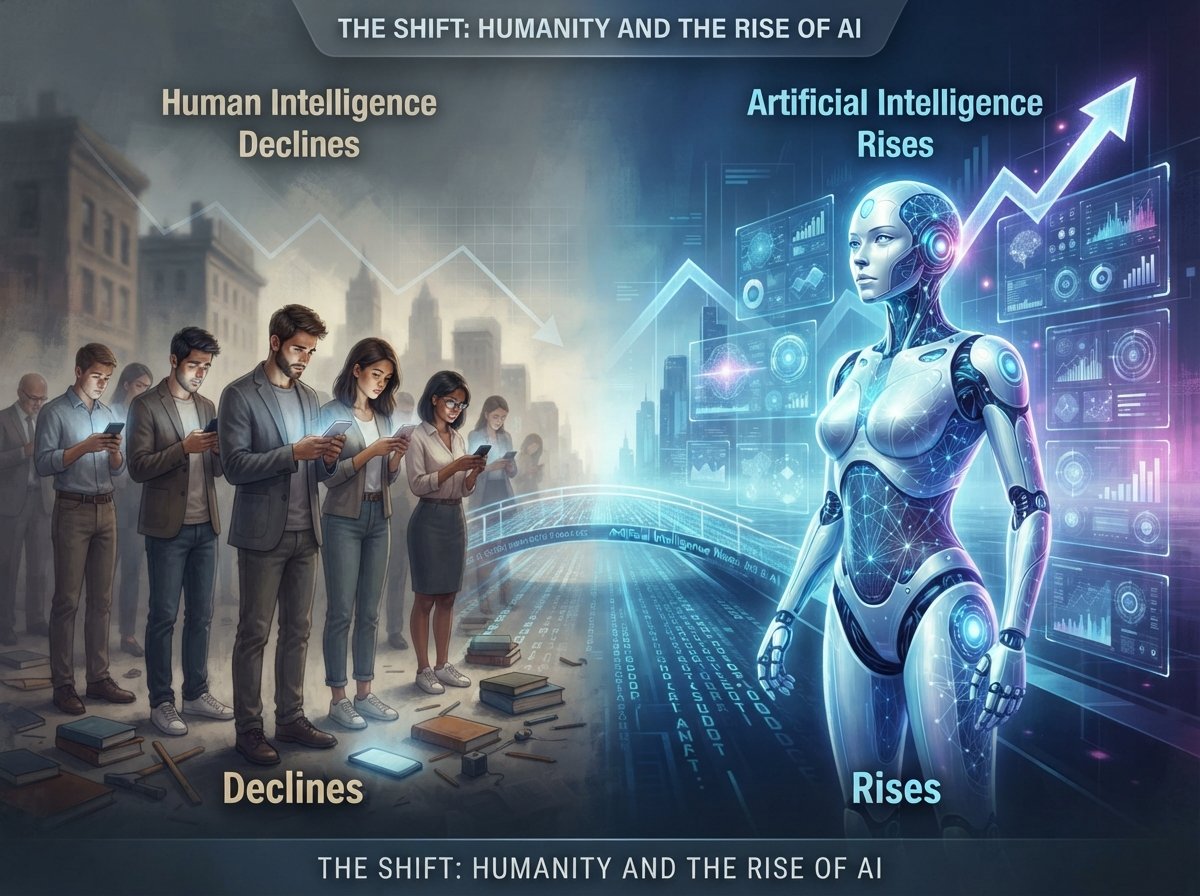
A Critical Reflection
Human history is the story of the evolution
of human consciousness. When humans first fashioned tools out of stone, it
marked the beginning of a new era of convenience. They learned to control fire,
invented the wheel, laid the foundation of agriculture, and built industries.
In every era, technology simplified human life. However, modern technology is
taking a different toll: are we surrendering our natural abilities in exchange
for convenience?
Today, we live in an era where Artificial
Intelligence (AI) dominates every facet of life. This is not just an invention;
it reflects human intellect itself. Computers, smart devices, and modern
systems are no longer limited to basic calculations they write, speak, create
images, diagnose illnesses, and even suggest decisions. While this convenience
seems beneficial on the surface, a hidden vulnerability is taking root: are we
undermining our own capacity to think?
In the past, finding an answer required
opening books, searching through pages, and engaging the mind. Today, typing a
few words on a smartphone screen yields instant results. Accessing information
has become easy, but turning information into wisdom is a completely different
matter. Information without wisdom can alter human judgment. Wisdom stems from
deep thought, experience, and effort.
The human brain acts like a muscle: if left
unused, it grows weak. Today’s children and youth rely on calculators and
digital apps for basic calculations and tasks. While these tools offer
convenience, relying entirely on them causes our native intellectual
capabilities to rust.
The positive aspects of AI cannot be
denied, but its overreliance poses real challenges. In medicine, systems can analyse
scans and help doctors diagnose diseases. In education, platforms guide
students based on their strengths and weaknesses. In industry, automated
machines boost efficiency and standards. All of these are examples of progress.
However, with progress comes
responsibility. If technology begins shaping our daily lives without critical
thought, we must pause to consider the outcome. When algorithms dictate what we
watch, what we buy, and how social media influences our preferences, our
independent thinking is compromised. We tend to see only what reinforces our
existing views, creating narrow echo chambers.
This digital landscape is gradually
altering our habits. Long-form reading feels daunting, deep conversations have
been replaced by short text messages, and real research is often bypassed for
quick online summaries. As screens capture our constant focus, genuine human
connection fades.
Impact on Employment and Ethics
Education is meant to build curiosity, but
when students use AI to complete their assignments without thinking, their
critical capabilities suffer.
Automated systems and intelligent machines
are reshaping workforce needs across industries. Factories, financial
institutions, and service sectors are shifting toward automation. This shift
brings productivity gains, but it also raises concerns about job security.
The question is not whether technology
should be halted, but how we adapt our educational systems to build skills
alongside machine intelligence.
The rise of AI brings complex ethical
questions. Machines lack personal experience, empathy, and moral judgment. When
biased data is fed into algorithms, the outcomes can inherit those biases.
Without proper oversight, automated systems can infringe on privacy and
compromise human dignity. Clear rules and ethical guidelines are essential to
safeguard human rights.
Art, poetry, music, philosophy, and
spirituality are realms where human identity shines brightest places where
humans explore deep emotional truths. Handing these domains entirely to
machines dilutes our intrinsic creative spark.
If we let machines make our critical
decisions, we risk handing over control to systems devoid of empathy. If
surveillance and data tracking go unchecked, individual freedom is compromised.
Expert warnings remind us that if future AI systems operate autonomously
without proper guardrails, the consequences could affect not just individuals,
but society as a whole. History shows that every major invention carries risks,
but human intellect and ethics have consistently helped navigate those
challenges.
Preserving the Human Element
The core issue is not the machine itself,
but our relationship with it. If we let machines master us, technology will
dominate; but if we use it as a tool, it can elevate human potential.
We must remember that AI is a product of
human intelligence it cannot feel, love, or experience grief. It can generate
images, but it cannot experience beauty.
To preserve human identity, we need clear
ethical boundaries. We must ensure technology serves human dignity rather than
diminishing it. If we surrender creative and moral decisions to machines, we
risk weakening the inner light of human insight.
It is vital to build strong intellectual
foundations. Reading, reflecting, discussing, and asking questions are habits
that keep human consciousness alive.
Empathy and emotional awareness are
qualities technology cannot replicate. Families and communities are also
impacted by this shift: children grow up accustomed to screens, parents remain
occupied with devices, and real-world connection recedes.
This is not a time to fear, but a time to
act with awareness. Technology is a useful tool, but it should not replace
human relationships. A digital interaction cannot replace a warm smile, a
meaningful conversation, or a shared meal.
In education, care must be taken to prevent
passive reliance on technology. If students rely entirely on AI to complete
work, their independent thought becomes constrained. Teachers should encourage
students to analyze, reason, and think critically, using AI as a helper rather
than a substitute for effort.
We also need to implement thoughtful
governance. Transparent laws, ethical standards, and privacy protections are
necessary to manage data misuse and algorithmic bias. Raising public awareness
helps people use technology wisely, maintaining balance in their lives.
Ultimately, the choice rests with us. Will we allow artificial intelligence to weaken human intellect, or will we use it to enhance our potential while keeping our humanity, empathy, and critical thinking intact? Maintaining that balance is our true success.