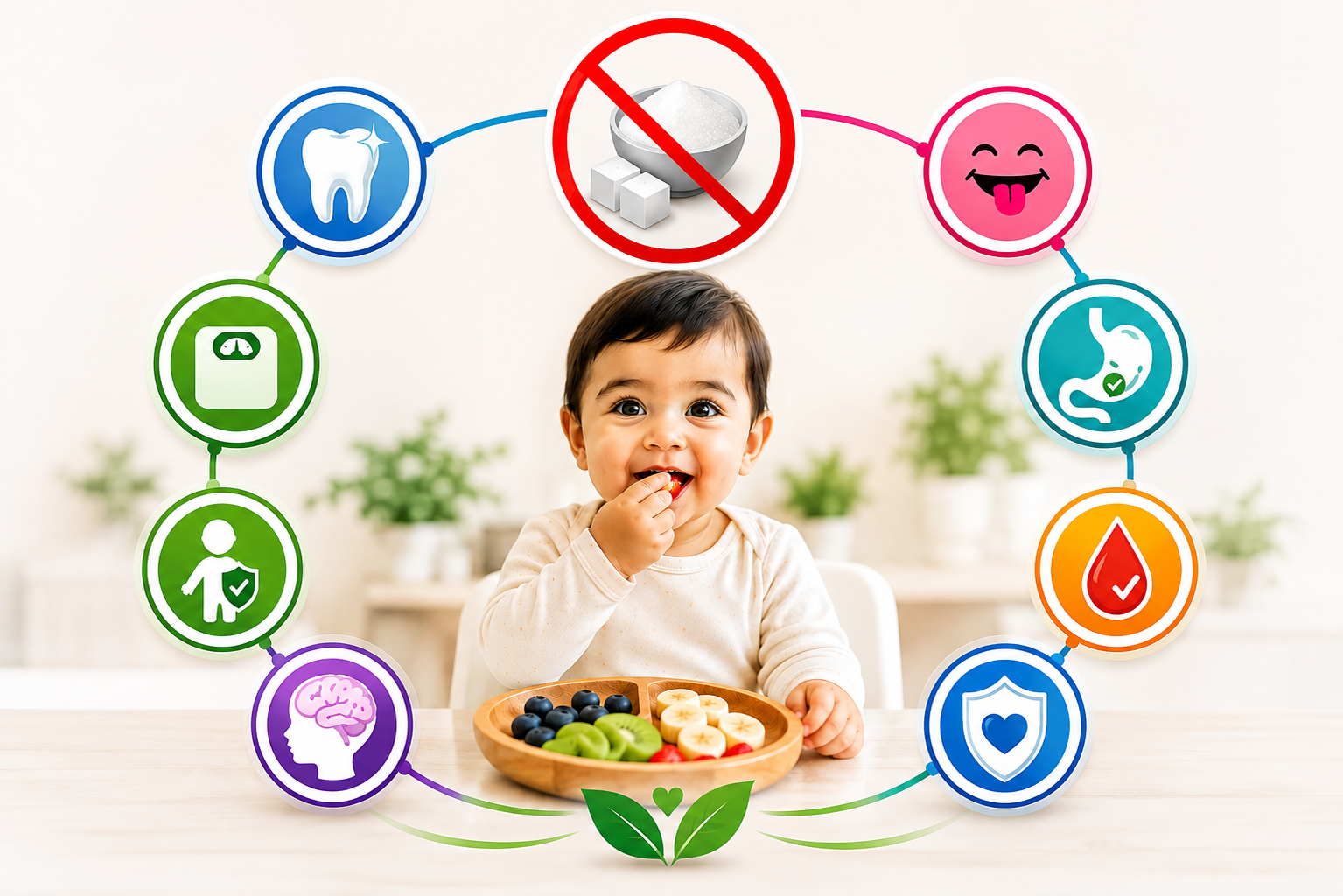
A Crucial Dietary Foundation
A recent health study highlights that
limiting or completely avoiding added sugar in a child’s diet before the age of
two significantly lowers their risk of developing diabetes later in life. The
research suggests that infants whose mothers maintained a low-sugar diet during
pregnancy, as well as during the first two years after birth, saw a 23% reduced
risk of developing anaemia and related metabolic conditions in adulthood.
Long-Term Protection Against Chronic Illnesses
Consuming high amounts of processed or
added sugars during early development is closely linked to Type 2 Diabetes and
cardiovascular vulnerabilities. Excess sugar intake can damage blood vessel
elasticity and increase the risk of arterial stiffness over time.
Recent scientific findings reveal that
managing daily sugar intake is vital not only for adults, but is equally
essential for safeguarding the long-term metabolic health of infants and young
toddlers.
Key Takeaways from Health Researchers
Lead researcher Dr. Yasin Azing-Rochin from
the Hong Kong University of Science and Technology emphasized that restricting
added sugar intake during the earliest stages of life yields lasting positive
effects on long-term health outcomes.
Key scientific highlights include:
1. Early
Exposure Matters: An infant's taste preferences and metabolic programming are
strongly influenced during their first 1,000 days of life.
2. Lower
Risk of Chronic Conditions: Reducing early sugar exposure significantly
minimizes future risks of diabetes and vascular damage.
3. Maternal
Diet Impact: Low-sugar intake by mothers during pregnancy and breastfeeding
directly supports healthy fetal and infant development.
Practical Tips for Parents
While these initial findings are highly
encouraging, health experts note that further clinical studies are ongoing to
confirm the full spectrum of long-term benefits.
In the meantime, parents are advised to:
1. Avoid
feeding sugary snacks, sweetened beverages, and artificial juices to infants
under two years of age.
2. Rely
on natural sources of sweetness, such as whole fruits, in moderation.
3. Carefully
read food labels on infant formulas and packaged baby foods to detect hidden
sugars.
Establishing healthy dietary habits early
in a child's life serves as a strong safeguard for their long-term well-being
and lifelong physical health.