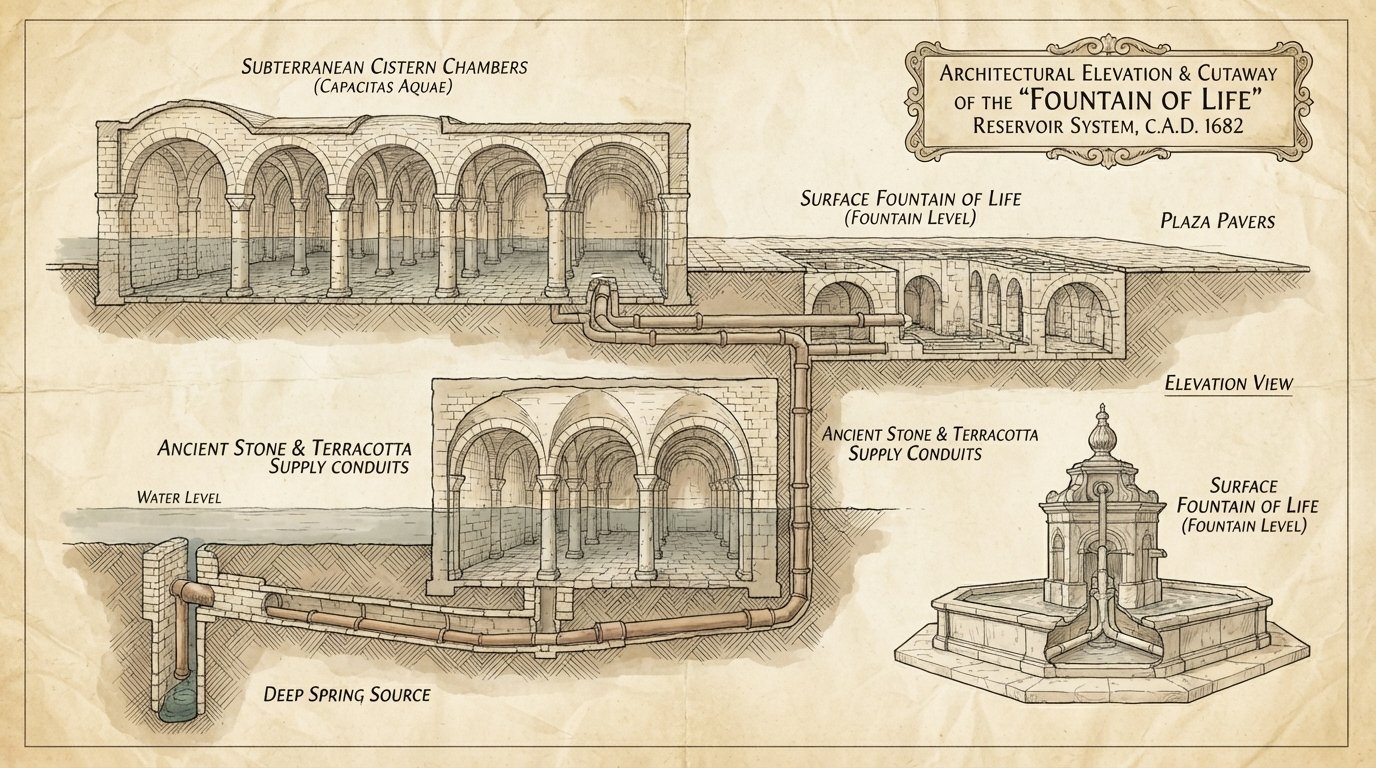
A Remarkable Archaeological Unearthing
The earth beneath our feet preserves the
secrets and structural foundations of human history. During renovation and
elevator installation work at the historic Museo Histórico Cabildo in
Montevideo, Uruguay, excavation teams uncovered an ancient subterranean
structure. Initially assumed to be ordinary structural foundations,
archaeological examination revealed a centuries-old colonial water reservoir
and fountain system often termed the "Fountain of Life".
Led by archaeological teams, excavations
uncovered clay pottery, smoking pipes, architectural stone channels, and
remnants dating back to the colonial and early independence periods of the Río
de la Plata region. Beyond its architectural intrigue, the discovery provides
deep insight into how urban settlements were designed around water security, defence,
and communal survival.
Water As Power, Defence, And Strategic Survival
[
Fortified City Under Siege] ──► [ Internal Cisterns & Springs] ──► [ Survival & Sovereign Control]
·
Fortress Defence: In colonial
Montevideo, a fortified port city subject to naval blockades and military
sieges, external supply lines were easily cut off. Internal water cisterns
(aljibes) and natural freshwater springs were vital to resisting sieges.
·
The "Healing" Waters
of Early Settlers: Colonial lore documented prominent freshwater springs, such
as that attributed to early settler Luis Mascareñas, which were celebrated not
only for basic hydration but also believed to possess restorative health
properties.
·
Geopolitical Rivalry: In Latin
America’s colonial era, control over river networks, ports, and freshwater
springs drove persistent competition between imperial powers (Spain, Portugal,
Britain, and France), frequently weaponizing water access to displace native
communities.
The Timeless Value Of Water: Faith, Culture, And Ecology
Across every civilization and philosophical
tradition, water has represented far more than a chemical compound (H_2O):
·
Spiritual Significance: In
Islamic tradition, water symbolizes spiritual purification and the preservation
of life. In Hindu tradition, sacred rivers like the Ganges embody spiritual
rebirth, while ancient Greek thought regarded water as a primary elemental
principle of existence.
·
The Foundation of Civilization:
Societies that managed, conserved, and respected their water systems
flourished; those that depleted or neglected their water infrastructure faced
collapse.
A Modern Warning: Contemporary Water Scarcity
The discovery in Montevideo serves as a
poignant mirror for modern society:
·
Global Scarcity: According to
United Nations reports, billions of people worldwide face freshwater stress,
declining water tables, and contaminated drinking supplies.
·
Urban Concrete Jungles: Modern
urbanization frequently paves over natural wetlands, dams seasonal rivers, and
discharges industrial waste into freshwater channels, trading long-term
ecological balance for short-term expansion.
·
Generational Responsibility: If
past civilizations recognized every freshwater spring as a strategic and sacred
lifeline, modern societies cannot afford to treat water as an expendable
resource.
Conclusion
The centuries-old water reservoir beneath
Montevideo reminds us that human progress has always depended on our
relationship with natural resources. Protecting freshwater aquifers, conserving
rainfall, and curbing industrial pollution are not merely technical challenges they
are prerequisites for sustaining civilization itself.