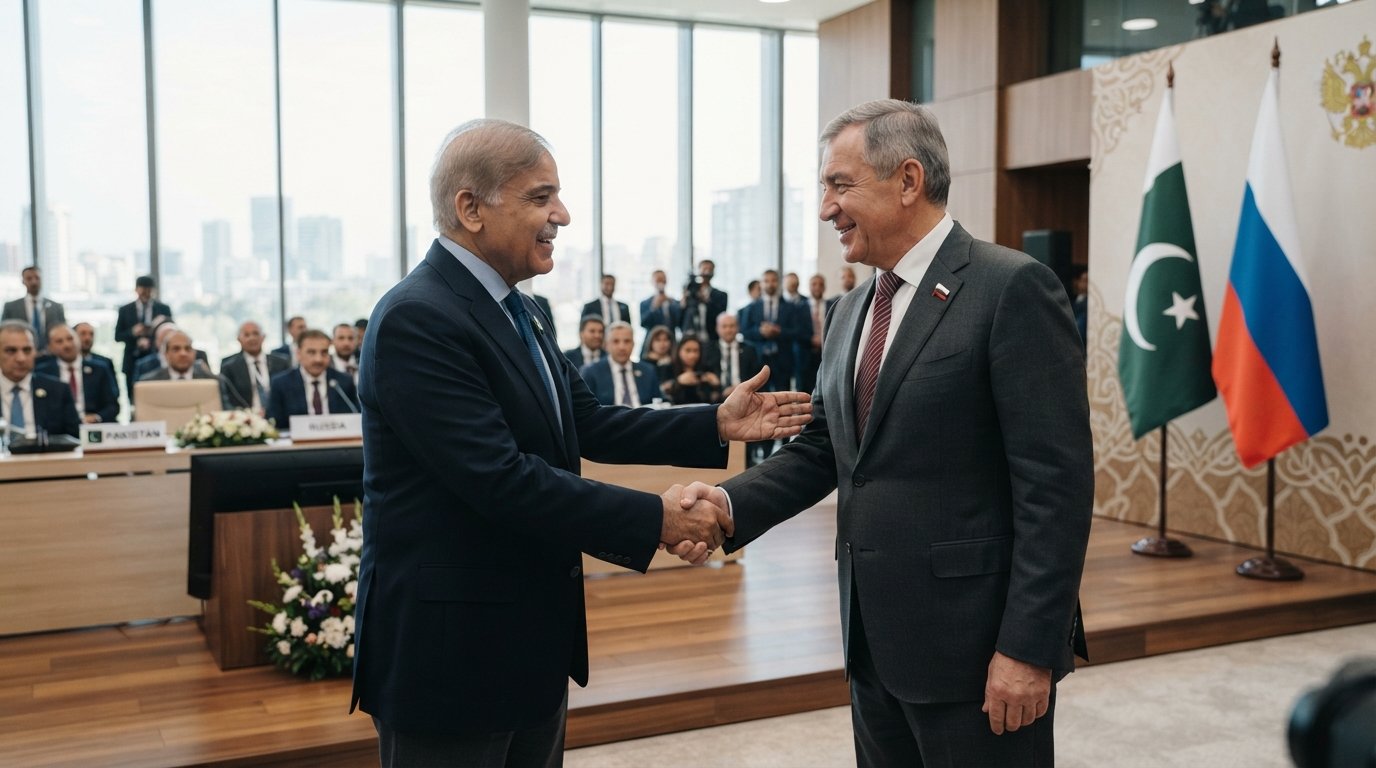
A Paradigm Shift in Bilateral Relations
Diplomatic and economic relations between
Pakistan and Russia have entered a constructive and forward-looking phase in
recent years. Moving beyond the historical baggage and rigid alignments of the
Cold War era, both Islamabad and Moscow have recognized the imperative of
pragmatic engagement driven by mutual economic interests, trade connectivity,
and regional security.
Recent high-level diplomatic contacts including
interactions between top leadership, foreign ministers, and deputy prime
ministers reflect a shared commitment to transform traditional diplomatic ties
into a comprehensive, multi-dimensional partnership. In an increasingly
multipolar world, Pakistan’s balanced foreign policy aims to expand
constructive relations across major powers without compromising its traditional
partnerships.
Pillars Of Expanding Bilateral Engagement
1. Energy Security and Infrastructure
Energy cooperation forms the cornerstone of
expanding Pakistan-Russia ties:
·
Meeting Growing Demand: With
Pakistan facing rising domestic and industrial energy needs, reliable and
cost-effective access to Russian crude oil, petroleum products, and liquefied
natural gas (LNG) offers vital economic relief.
·
Infrastructure Collaboration:
Technical expertise from Russia in energy pipelines, refinery modernization,
and transport infrastructure presents long-term development opportunities for
Pakistan’s industrial base.
2. Trade Expansion and Agricultural
Modernization
While bilateral trade volume has grown, it
remains below its full potential. Unlocking this capacity requires structured
economic initiatives:
·
Agricultural Synergies: As an
agrarian economy, Pakistan can benefit substantially from modern Russian
agricultural machinery, seed technology, and fertilizers to boost crop yields.
·
Export Opportunities:
Broadening Pakistani exports particularly textiles, leather goods, surgical
instruments, pharmaceuticals, and fresh produce (fruits and vegetables) into
the expansive Russian market.
·
Overcoming Financial
Bottlenecks: Establishing direct banking channels, institutional trade
mechanisms, and bilateral currency settlements to eliminate transaction hurdles
for business communities on both sides.
3. Science, Technology, and Education
·
Academic Exchanges: Enhancing
university partnerships, joint research programs, and technical student
exchanges to equip youth with modern scientific skills.
·
Technology Transfer: Partnering
in scientific research, industrial engineering, and IT development to enhance
productivity and export competitiveness.
Regional Stability, Connectivity, And Multilateralism
1. Afghanistan and Central Asian
Connectivity
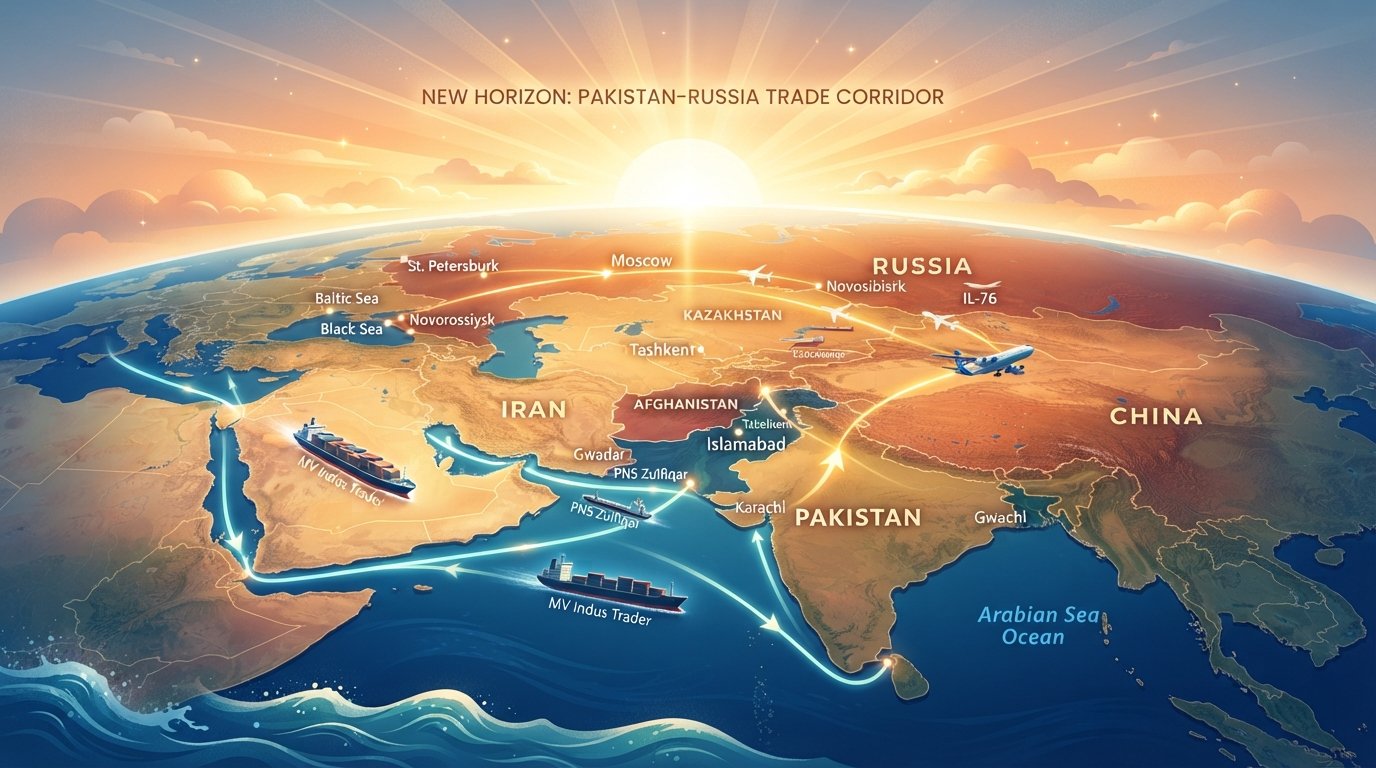
Both Pakistan and Russia share a common
interest in a peaceful, politically stable, and economically integrated
Afghanistan. Stability in Kabul is essential to unlocking overland trade
corridors and energy pipelines linking Central Asia and Russia to the Arabian
Sea via Pakistani ports.
2. Diplomacy Over Confrontation
In a global environment often characterized
by unilateral sanctions and escalating conflicts, the Pakistan-Russia dialogue
model champions diplomacy, peaceful dispute resolution, and mutual respect for
state sovereignty through platforms like the Shanghai Cooperation Organisation
(SCO).
3. Non-Exclusive, Balanced Foreign Policy
A core principle of Pakistan’s foreign
policy is that its growing partnership with Russia is not directed against any
third country. Islamabad continues to maintain vital, strategic relations with
China, the United States, European nations, and regional partners, positioning
itself as a bridge for regional cooperation rather than an arena for bloc
rivalries.
Strengthening People-To-People And Cultural Ties
Sustainable bilateral relations require
broad-based public and cultural connection alongside government-to-government
agreements:
·
Business Delegations:
Organizing regular trade exhibitions, single-country expos, and B2B delegations
to familiarize commercial sectors with market standards and regulatory
procedures.
·
Tourism and Cultural Exchange:
Encouraging travel, media collaboration, and sports exchanges to build mutual
understanding, goodwill, and cultural affinity between the people of both
nations.
Conclusion
The evolving partnership between Pakistan
and Russia represents a positive development for regional stability and
economic integration. By anchoring their cooperation in energy security, trade
diversification, and peaceful regional diplomacy, Islamabad and Moscow are
establishing a sustainable framework that serves both their national interests
and the broader objective of Eurasian connectivity and peace.