Reassuring Tehran on the Makkah Pact
In recent diplomatic moves, Pakistan has
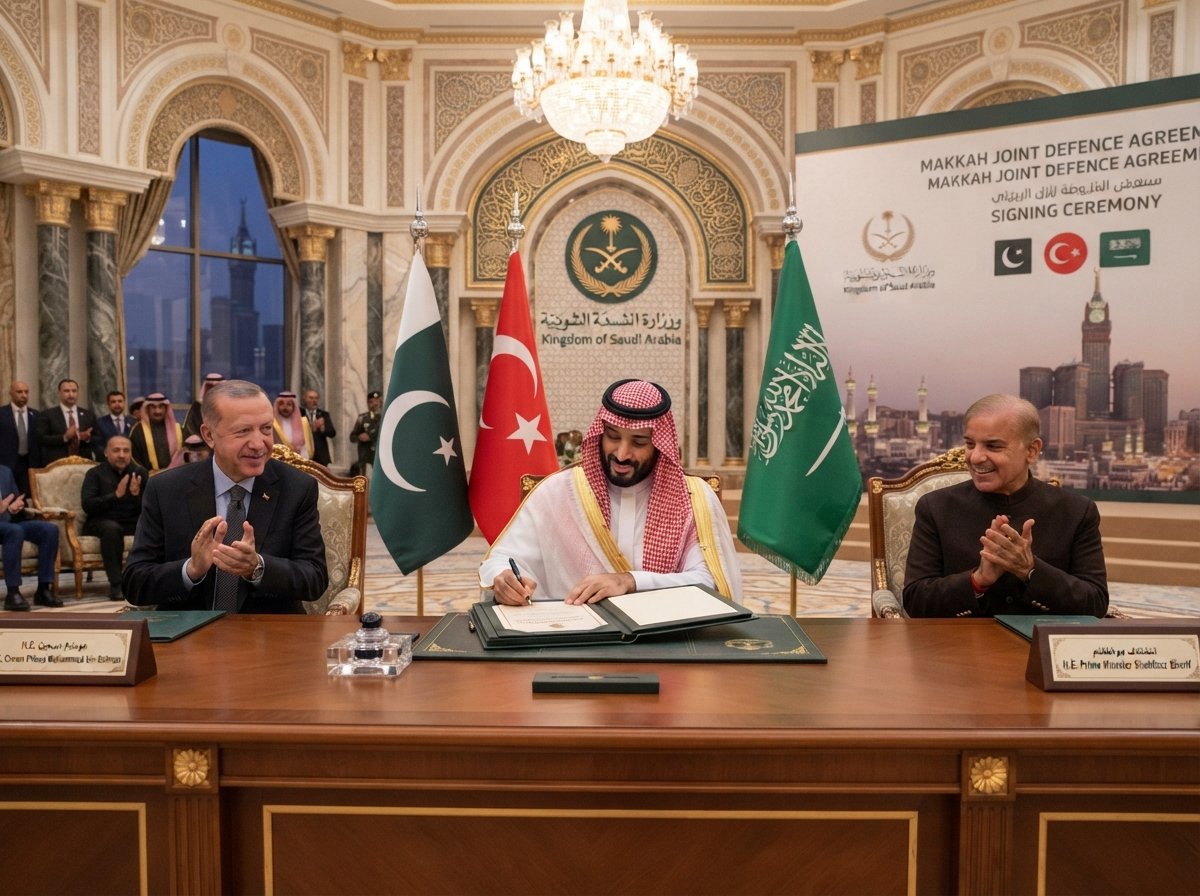
actively worked to reassure Iran regarding the newly signed Makkah Joint
Defence Agreement between Pakistan, Saudi Arabia, and Türkiye. Pakistani
leadership clarified that the alliance is purely defensive and not designed as
an instrument of confrontation.
In a direct diplomatic exchange, Foreign
Minister Ishaq Dar informed Iranian Foreign Minister Abbas Araghchi that the
agreement poses no threat to Tehran. Prime Minister Shehbaz Sharif similarly
briefed the cabinet, reinforcing that the alliance exists "entirely for
defence purposes".
Tehran has received these assurances
positively. An Iranian Foreign Ministry spokesman noted that Iran has no reason
to view the pact as an attempt at regional encirclement, adding that such
agreements highlight how regional nations are moving away from sole reliance on
the U.S. security umbrella.
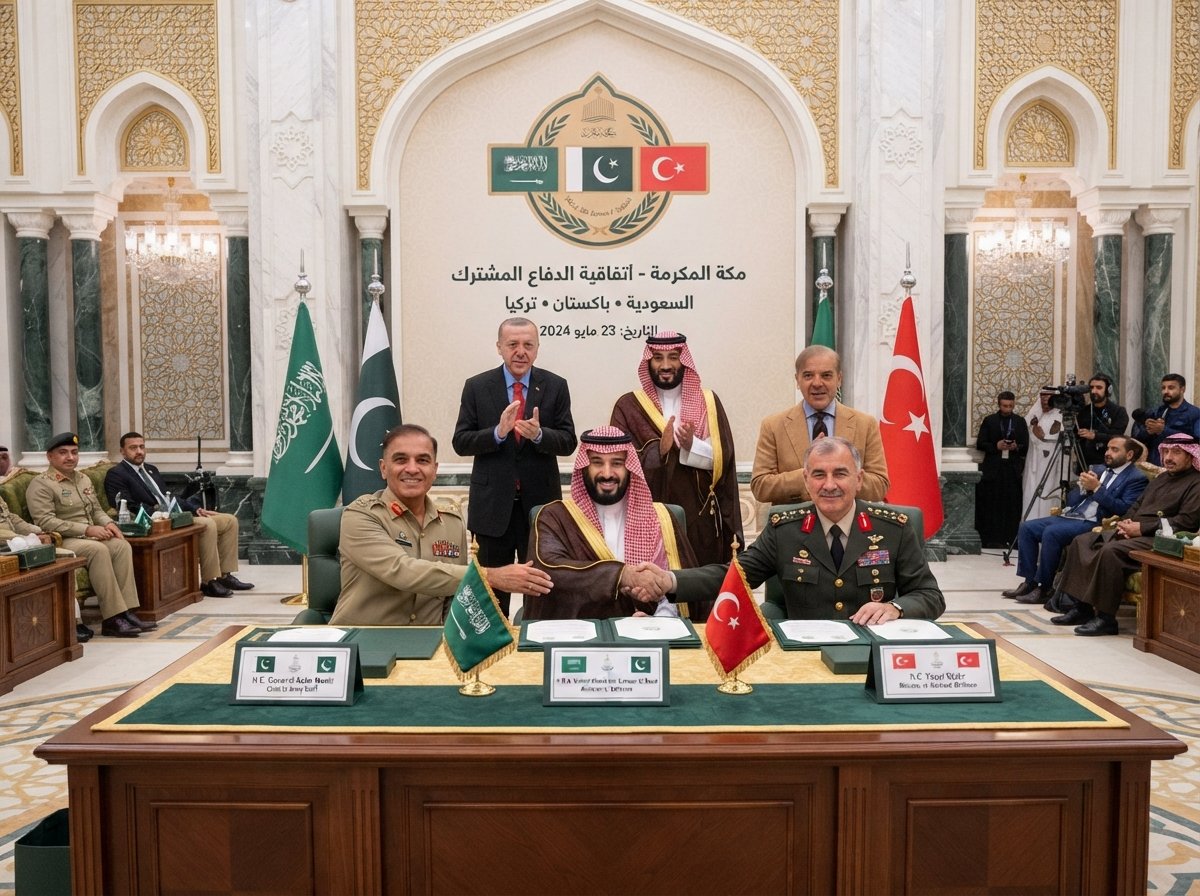
THE MAKKAH JOINT DEFENCE AGREEMENT
Context and Strategic Misgivings
Initial geopolitical concerns arose due to
the pact's mutual-defence clause, which stipulates that an attack on one
signatory is regarded as an attack on all. Because Iran had previously targeted
U.S. military assets located within Saudi Arabia and other Gulf states during
heightening regional hostilities, political analysts questioned whether the new
alliance might compel signatories into direct military involvement.
The prompt diplomatic clarifications from
Islamabad have effectively eased these immediate misgivings.
BUILDING AN INDIGENOUS REGIONAL SECURITY ARCHITECTURE
1. Moving Beyond Foreign Security Umbrellas
As the American military footprint across
the Middle East continues to shift, regional powers must construct an
independent security mechanism rather than relying on extra-regional powers.
The Makkah pact can serve as a foundational blueprint for broader defence
collaboration, with Turkish leadership already noting that the agreement
remains open to additional member states.
2. Bridging the Arab-Iranian Divide
Bringing Iran into broader regional
security arrangements could fundamentally stabilize the Middle East. However,
overcoming decades of deep mistrust between Arab nations particularly Saudi
Arabia and Iran remain a key hurdle.
Nations like Pakistan and Türkiye, which
maintain functional diplomatic relations with both Riyadh and Tehran, are
strategically positioned to act as mediators and build diplomatic bridges.
KEY CONFIDENCE-BUILDING MEASURES (CBMs)
To foster long-term stability and reduce
economic friction across the Gulf, concrete diplomatic steps are essential:
·
Reopening Critical Maritime
Routes: Iran should facilitate the complete reopening of the Strait of Hormuz,
as prolonged disruptions severely impact Gulf trade and energy supply chains.
·
Pledging Non-Aggression
Platforms: Arab states should commit to disallowing foreign powers from
utilizing their sovereign territory or airspace to initiate military actions
against Iran.
Looking Ahead
Replacing external security dependence with
a self-sustaining regional security framework offers the most viable path
toward lasting Middle Eastern stability. Through proactive diplomatic
engagement, Pakistan, Saudi Arabia, Türkiye, and Iran can help transition the
region from recurring confrontation toward cooperative security and economic
resilience.