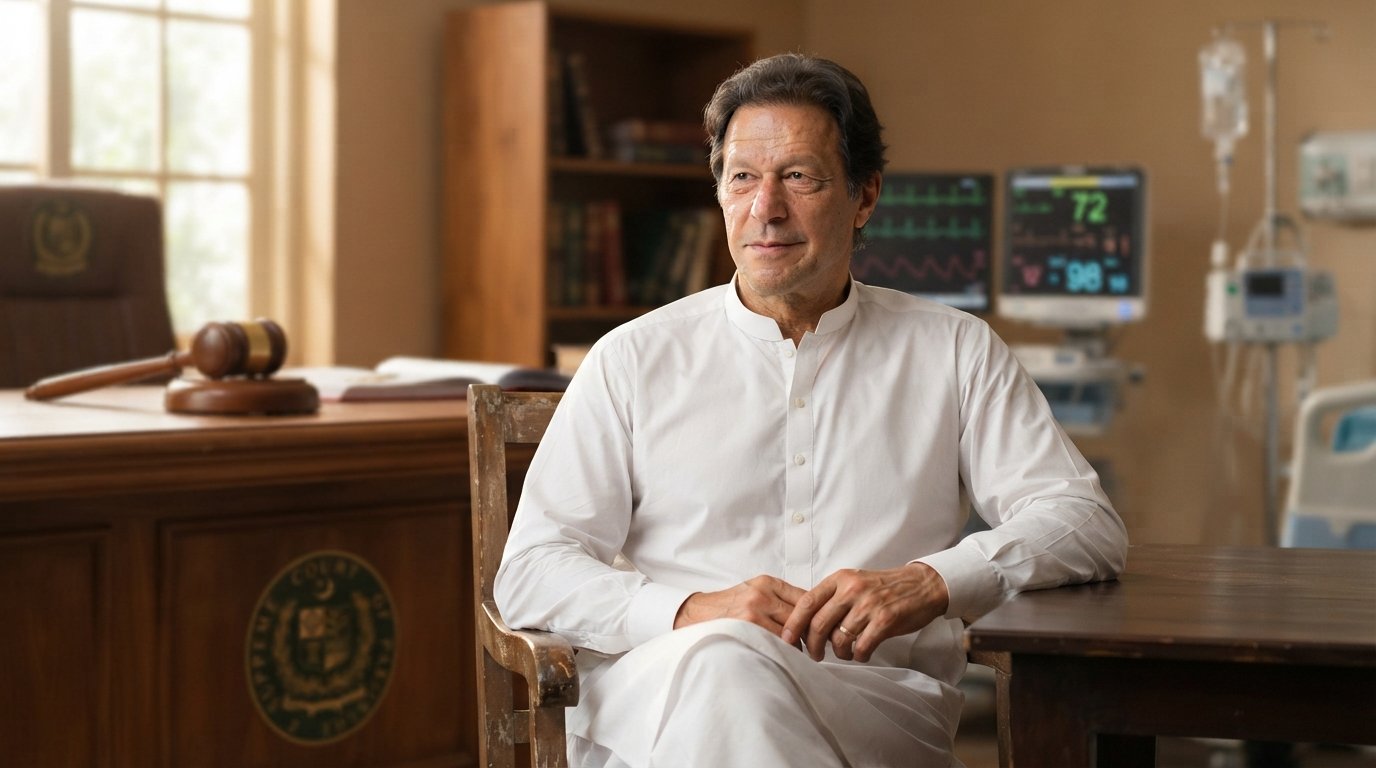
Judicial Action on Prisoner Welfare
The Supreme Court of Pakistan has formally intervened regarding the enforcement of basic rights and medical access for incarcerated former Prime Minister Imran Khan, approximately three months after being petitioned. Acting on medical reports indicating a concerning deterioration in the Pakistan Tehreek-e-Insaf (PTI) founder's health, the apex court issued directives to transfer him to Islamabad’s Shifa International Hospital for a comprehensive medical examination.
The court explicitly noted its constitutional duty in the ruling, stating: “We are mindful of the constitutional and legal obligation of the state, and consequently of the Supreme Court, to safeguard the life, health, dignity and security of persons in custody.”
Key Directives Issued By The Apex Court
·
Specialized Medical
Examination: Directed authorities to conduct a thorough medical evaluation at
Shifa International Hospital, supervised jointly by health specialists, a
personal physician, and one of Mr. Khan’s sisters.
·
Family Visitation Rights: Ordered prison administration to facilitate regular weekly in-person meetings
with family members.
·
Telephonic Contact: Mandated
scheduled telephonic access between the former prime minister and his sons
residing abroad.
The Pattern Of Prisoner Neglect And Political Retribution

1. Administrative Resistance to Healthcare
Despite months of reports indicating health complications, jail authorities consistently denied any ailment and repeatedly resisted independent medical examinations by physicians of the prisoner’s choice.
2. A Recurring Historical Precedent
Denial of adequate medical care and dignified incarceration has been a recurrent feature of Pakistan’s political history:
·
Senior leaders across the
political spectrum including top figures in the PML-N and PPP have faced
similar prison conditions during past administrations.
· Breaking the cycle of political victimization requires current leadership to actively uphold universal standards of prisoner welfare, regardless of political affiliation.
3. The Plight of Other Incarcerated Leaders
The issue of prison conditions extends beyond high-profile figures. Multiple political prisoners including female political workers and elderly detainees continue to endure failing health and limited medical facilities, warranting equal judicial oversight and state compassion.
Core Takeaway
The state holds an unconditional
constitutional obligation to protect the physical well-being, dignity, and
legal rights of every person in its custody. Ensuring transparent medical
access, regular family contact, and humane prison standards is essential to
preserving the rule of law and ending the persistent cycle of political
retribution.