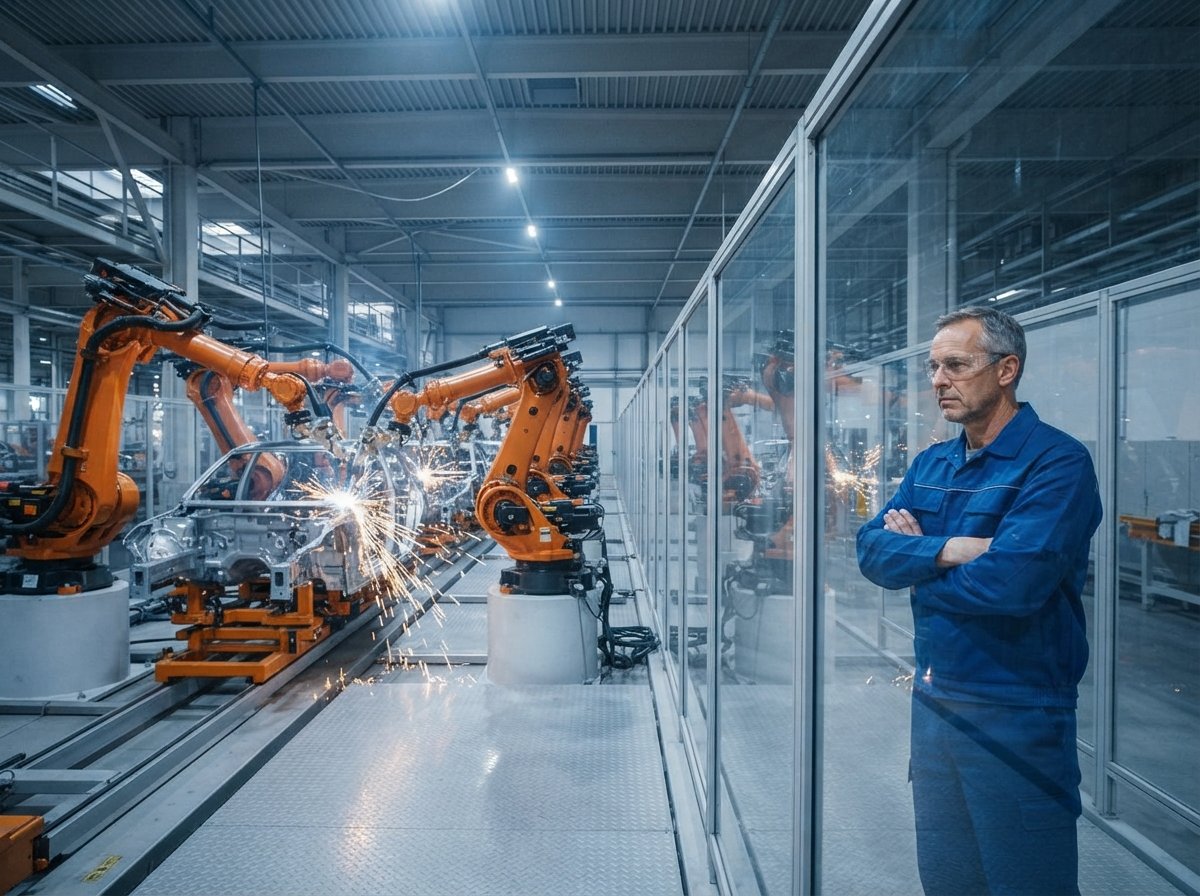
Navigating a Technological Revolution
Artificial Intelligence (AI) is no longer a
futuristic concept confined to science fiction; it has become an undeniable
reality of our daily existence. Just a few years ago, many assumed AI would be
restricted to automated factory machinery or sci-fi storylines. Today, AI
drives our smartphones, banking, healthcare, education, journalism,
agriculture, transport, trade, and government institutions.
This rapid integration has ignited a global debate: will AI eliminate human jobs, or will it open doors to unprecedented opportunities?
The reality lies somewhere between fear and
optimism. Whenever a transformative technology emerges, anxiety about job
displacement naturally follows. When the Industrial Revolution brought
automated machinery, millions feared lifelong unemployment. Yet, history
demonstrates that while technology renders certain traditional roles obsolete,
it simultaneously creates entirely new industries and employment opportunities.
AI in Healthcare and Critical Decision-Making
AI systems are revolutionizing medicine by analysing
complex medical imaging, assisting in early disease detection, and aiding
diagnostic procedures. However, an AI system cannot replace a doctor’s clinical
experience, medical judgment, or bedside manner when discussing treatment with
a patient and their family.
Crucial decisions especially those
requiring empathy, moral judgment, and contextual understanding still rely
heavily on human intelligence.
Reinventing Education and the Workforce
Education is undergoing a similar shift. AI
tools can provide personalized learning content and make complex topics easier
to understand. Yet, machines cannot replace the holistic role of a teacher, who
shapes a student's character, ethical framework, critical thinking, and
emotional resilience.
The key to thriving in an AI-driven economy
is skill adaptation. If we only worry that AI will take our jobs while
neglecting to update our skill sets, we risk falling behind. However, if we
align our educational systems and workforce training with modern technological
demands, AI can serve as a catalyst for growth.
High-demand fields created or expanded by
AI include:
1.
Digital Marketing &
E-Commerce
2.
Content Creation, Graphic
Design, & Video Production
3.
Software & Web Development
4.
Data Science, AI Engineering,
& Prompt Engineering
5.
Cybersecurity & Cloud
Computing
For developing nations like Pakistan, where
youth make up a large portion of the population, training the workforce in
these modern digital skills can unlock global freelance markets and remote work
opportunities.
The Indispensable Human Element
While AI excels at processing vast amounts
of data, writing code, generating images, translating languages, and performing
repetitive tasks, it lacks core human attributes:
1.
Empathy and Compassion
2.
Moral and Ethical Reasoning
3.
Emotional Intelligence
4.
True Creative Intuition and
Leadership
5.
Complex Interpersonal
Relationship Building
Jobs involving repetitive, routine tasks
are increasingly automated. However, roles requiring strategic insight, deep
human connection, high-level creativity, and ethical judgment remain firmly in
human hands. AI handles the heavy lifting of data analysis, leaving humans free
to focus on decision-making, innovation, and strategic direction.
Ethical Challenges and Policy Responsibilities
The rapid rise of AI brings significant
ethical, legal, and social questions that governments and institutions must
address:
Data Privacy & Security: Protecting personal information in an
interconnected digital world.
Algorithmic Bias: Ensuring AI models do not perpetuate existing social,
racial, or economic biases.
Legal Accountability: Establishing clear liability for decisions made by
autonomous or AI-assisted systems.
Governments bear a major responsibility to
soften the transition for displaced workers. This requires funding re-skilling
initiatives, vocational training programs, micro-loans for tech startups, and
updating school and university curricula to emphasize programming, data
science, critical thinking, and problem-solving alongside core human values.
Looking Ahead: Adaptation Over Fear
The fundamental question is not whether AI
will eliminate jobs; it is how prepared we are to adapt to the changing
landscape.
Throughout history, technology has reshaped
the nature of work while continually expanding human potential. AI is a
powerful assistant, not an absolute replacement. By combining technical
proficiency with uniquely human strengths morality, emotional intelligence,
critical thinking, and empathy we can harness AI to create better
opportunities, drive innovation, and build a more resilient future.